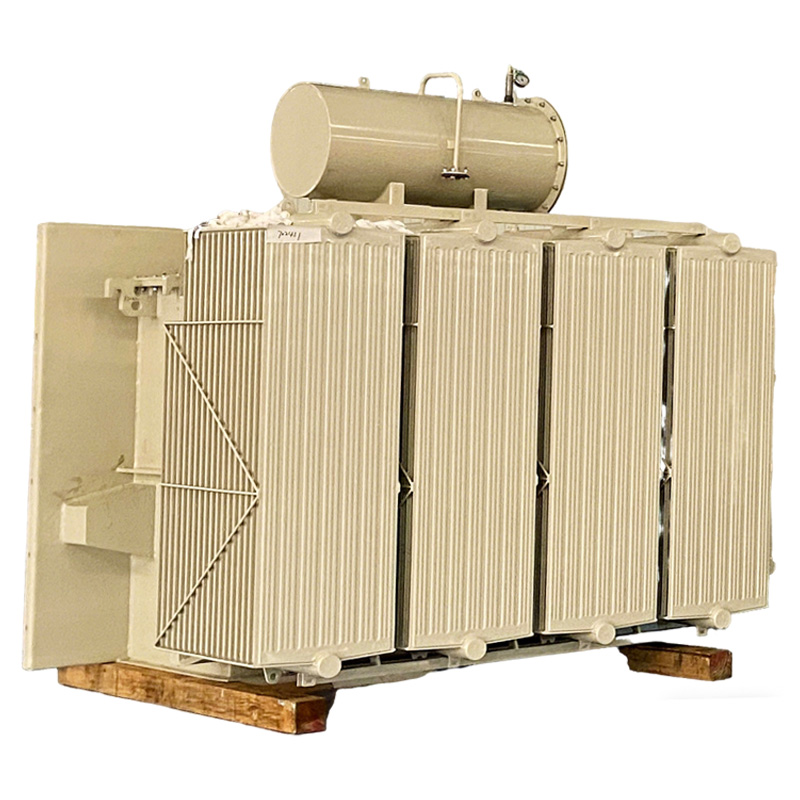
Description
1. Factory testing of the SZ Series OLTC 1000 kVA miniature substation transformer shall be performed in accordance with applicable ANSI/IEEE standards, including IEEE C57.12.90 and related standards. All required factory acceptance tests (FAT) shall be successfully completed prior to shipment.
2. Prior to energization, the transformer shall be inspected and verified to ensure compliance with approved drawings, nameplate data, and applicable specifications.
3. The on-load tap changer (OLTC) shall undergo functional and mechanical operation tests in accordance with IEEE C57.131, including contact operation verification and control functionality checks.
4. No-load, load, and dielectric tests shall be conducted as specified by applicable ANSI/IEEE standards. Test durations and procedures shall follow standard requirements; extended no-load running time is not required unless specifically specified by the project documents.
5. After successful completion of factory tests, the transformer shall be prepared for shipment. Field acceptance testing (SAT), if required, shall be performed in accordance with NETA ATS or project specifications.
6. Field repair of oil-containing components, including tanks and castings, is not permitted. Any oil leakage identified during factory testing, transportation, or commissioning shall require corrective action by the manufacturer in accordance with UL requirements, manufacturer procedures, and utility standards.
7. All corrective actions shall maintain the transformer’s UL Listing, warranty, and compliance with ANSI/IEEE standards. Unauthorized field modifications or structural repairs are not acceptable.

FAQs
Our recommendation is that you buy a purpose-built step-up transformer instead of reverse feeding when possible.
Learn more about reverse-feeding transformers in this article.
The DGA has long been the most reliable and accurate method for determining the internal health of oil-filled transformers. The analysis requires drawing an oil sample from the unit, extracting the gasses from the sample, and analyzing the gasses through gas chromatography. The results of the chromatography tell the lab about different problems that may be arising inside the transformer. Some modern transformers have gauges on them that read levels of dissolved gasses in the oil in real time. But usually, the oil must be drawn and sent to a lab.
If you are unsure if an autotransformer is compatible with a particular piece of equipment, we recommend contacting the equipment manufacturer. However, as a general rule, this issue goes beyond the scope of an equipment manufacturers’ specifications since it is largely dependent on the existing electrical system configuration, where the equipment is installed, and local code requirements.
One hard and fast rule around autotransformer use: If the machine requires a neutral, and your system does not have one, an isolation transformer is required to create that neutral. Autotransformers do not create their own neutrals.
If your primary concern is lead time, repair is almost always quicker than buying a new unit—and this is especially true given the current supply chain crisis.
However, replacing the damaged unit with a reconditioned one can sometimes be just as fast or faster than repairing or replacing with a brand new unit. If an available reconditioned unit matches the dimensions of the unit in need of repair, you can sell the failing one and replace it with the reconditioned one.
Maddox has thousands of reconditioned, ready-to-ship transformers in stock for most common voltage configurations. These are typically available with a warranty comparable or identical to the warranties of newly manufactured units.