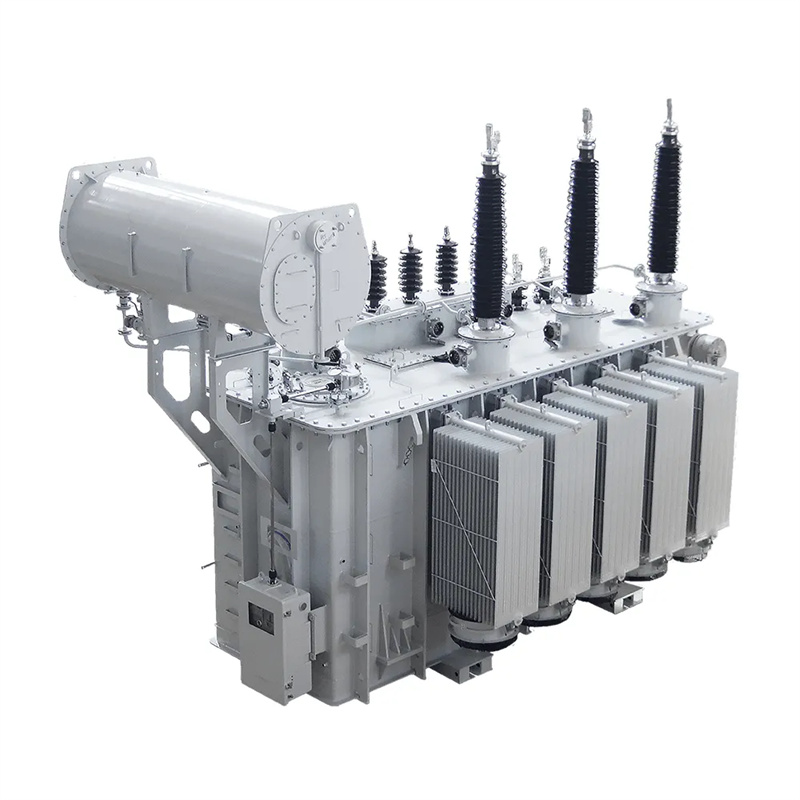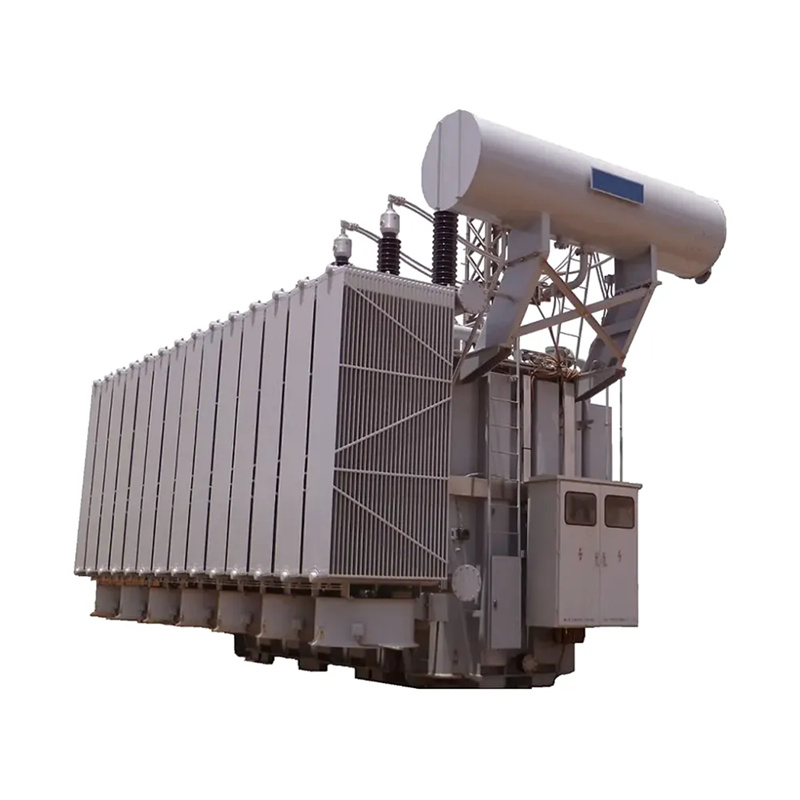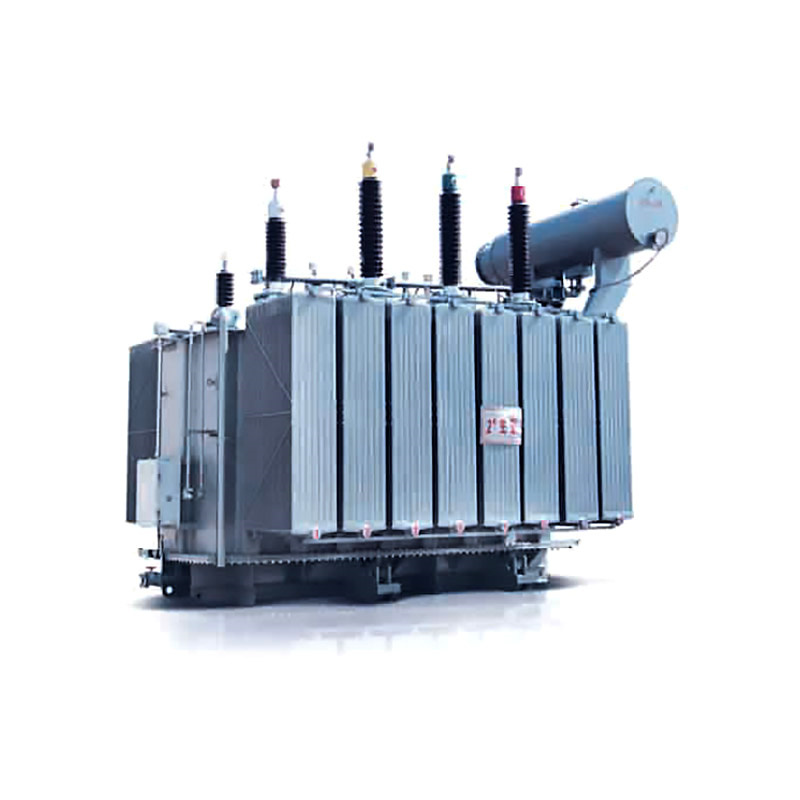
500kV single-phase double-winding power transformer
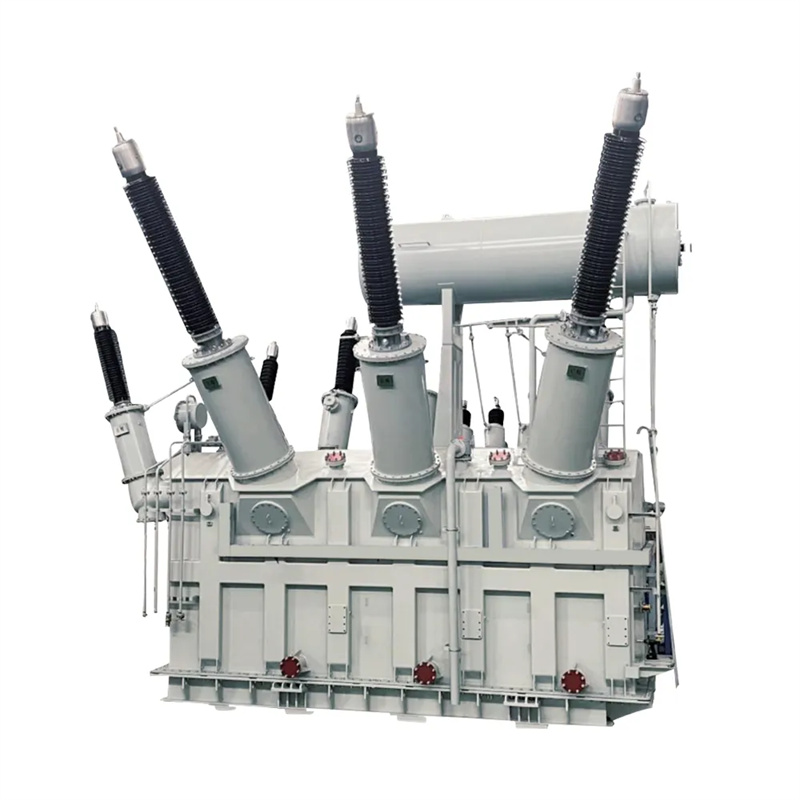
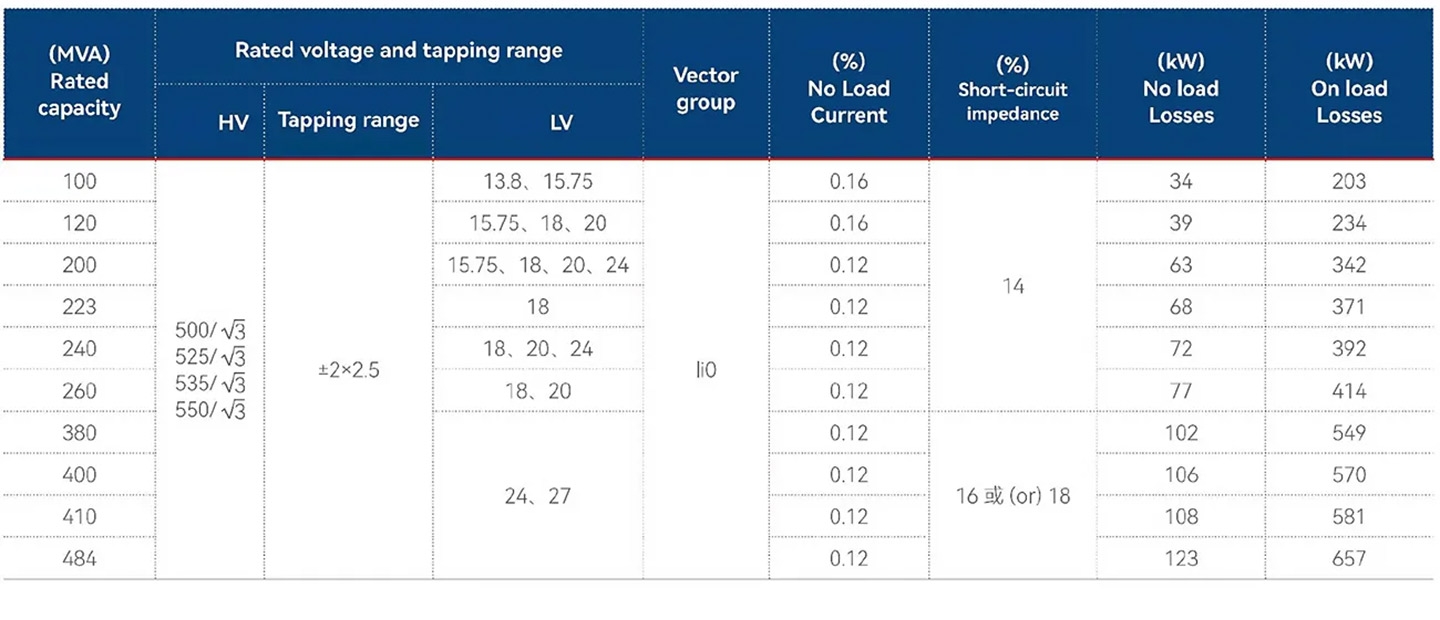
PRODUCT PARAMETERS
Description
Large power transformers are the "heart" of modern power systems, serving as the core equipment for energy transmission, distribution, and utilization. They undertake the important tasks of voltage conversion, energy distribution, and system isolation. Its performance, reliability, and efficiency are directly related to the safety, stability, and economic operation of the entire power grid.
1. Definition and core functions
Definition: A large power transformer is a static electrical device that uses the principle of electromagnetic induction to convert AC electrical energy of one voltage level into AC electrical energy of another voltage level at the same frequency through an AC magnetic field. Usually refers to transformers with voltage levels of 110kV and above, and capacities ranging from tens of MVA (megavolt ampere) to thousands of MVA。
a. Three core functions:
a.1 .Voltage conversion: This is its most basic function. In power plants, the lower voltage generated by the generator (such as 10.5kV, 20kV) is raised to ultra-high voltage or extra high voltage (such as 220kV, 500kV, 1000kV) through a step-up transformer to greatly reduce line losses during long-distance transmission. At the load center, the voltage is gradually reduced through step-down transformers (such as 110kV, 10kV, 400V) to meet the electricity needs of various users.
a.2. Electricity distribution: In substations, transformers collect and redistribute electricity from different directions and voltage levels, serving as the hub nodes of the power grid.
a.3. Electrical isolation: By coupling the magnetic field, the primary and secondary circuits of the transformer are electrically isolated, which enhances the safety of the system and can change the grounding method of the system。
2. Main types and structures
2.1. Classify by cooling medium and method (this is the most common classification method)
·Oil immersed transformer: This is the absolute mainstream form of large transformers.
· Structure: The core components (iron core and winding) are immersed in an oil tank filled with transformer oil。
·Cooling method:
· ONAN(Oil immersed self cooling: relying on natural convection of oil and radiation heat dissipation on the surface of the oil tank. Used for smaller capacities。
· ONAF(Oil immersed air cooling: Add a fan to blow air into the oil tank to enhance heat dissipation. Widely used。
· OFAF(Strong oil air cooling: Use an oil pump to force oil circulation, supplemented by a fan for cooling. Used for large capacity transformers.
· OFWF(Strong oil water cooling: Use an oil pump to force oil circulation and cool the hot oil through a water cooler. Used for giant transformers, especially power stations near water sources.
· Advantages: Excellent insulation and cooling performance, relatively low cost, mature technology, and the capacity can be made very large.
· Disadvantages: There is a risk of fire (fire extinguishing system is required), the weight and volume are large, and regular oil treatment is required.
2. 2.Classify by phase number
· Three phase transformer: The vast majority of power systems use a three-phase system, so a three-phase integrated transformer is the most common structure, saving space and materials, and having high efficiency.
·Single phase transformer group: Three independent single-phase transformers are connected to form three phases for use. Commonly used in the field of ultra-high voltage (UHV), the advantages are convenient transportation (single unit weight and volume are smaller than three-phase integrated), small backup capacity (only one backup unit is needed), but high cost and large footprint.
2.3. Classified by voltage regulation method
· Non excitation voltage regulation: The voltage must be adjusted by changing the tap position in the event of a transformer power outage, with a small adjustment range (usually ± 5%)。
·On load voltage regulation: It can automatically or manually change the tap position to stabilize the output voltage when the transformer is running with electricity and the load is not interrupted. This is a standard configuration for modern large transformers (especially step-down transformers), which is crucial for voltage stability in the power grid. The core component is the on load tap changer, which has extremely complex technology.
FAQs
Can you reverse-feed a transformer?
Our recommendation is that you buy a purpose-built step-up transformer instead of reverse feeding when possible.
Learn more about reverse-feeding transformers in this article.
What is a DGA?
How do I know if my machine requires isolation?
Is it quicker to repair or replace my transformer?